
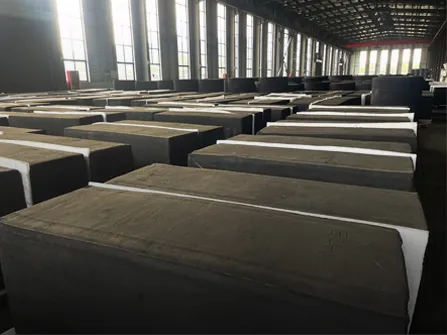
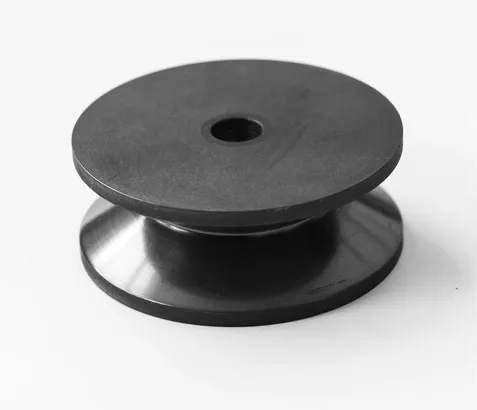
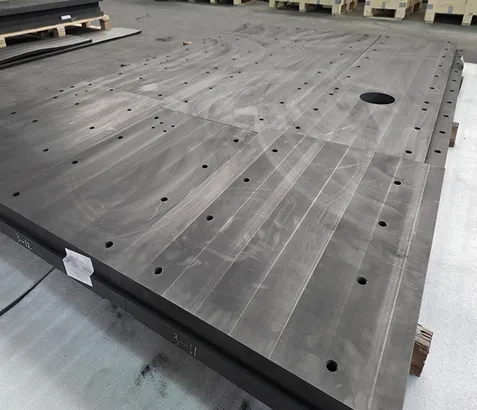
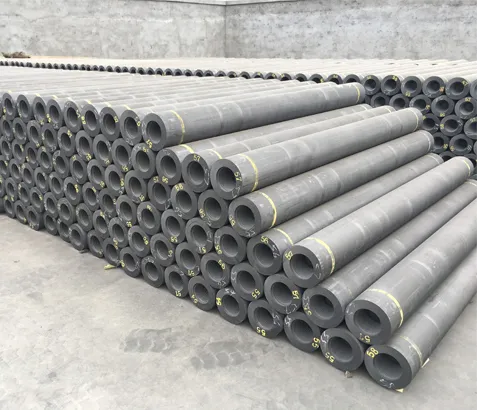
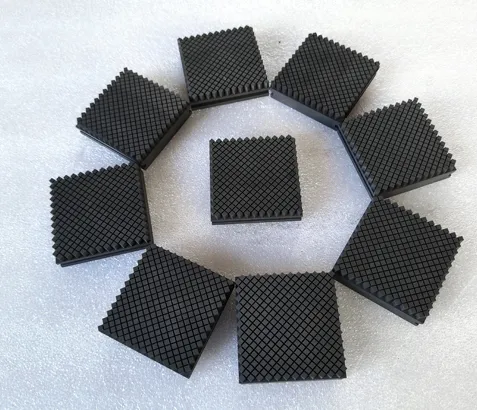
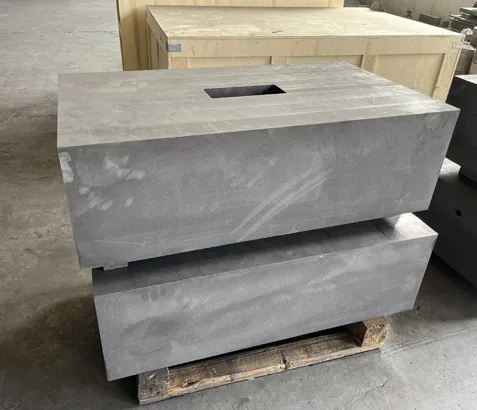
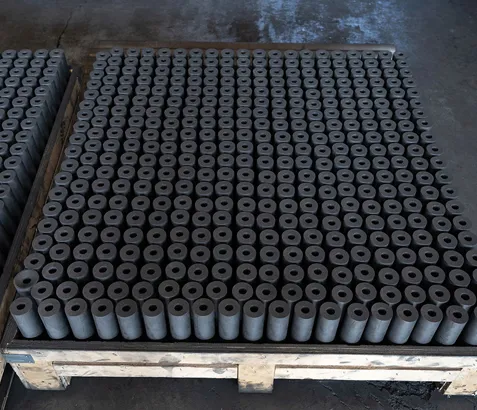
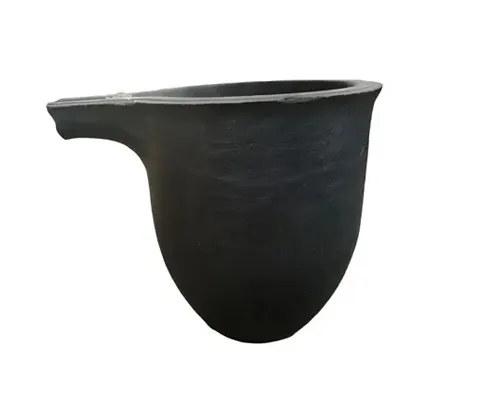
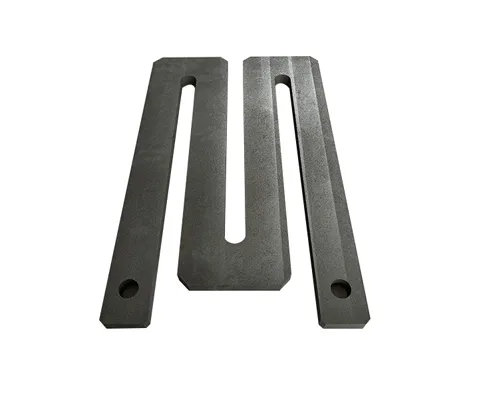
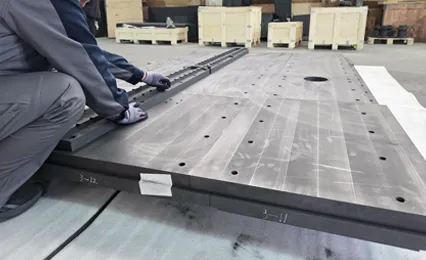

Isostatic graphite:The mixed raw materials are loaded into flexible molds and placed inside a high-pressure vessel. Subsequently, a liquid medium (such as water or oil) is pumped into the container, applying uniform pressure of up to 100–300 MPa onto the mold. This "isostatic" compression method enables graphite powder to compact tightly under non-directional pressure, forming isotropic green bodies. Compared to other shaping methods, isostatic pressing offers advantages such as uniform internal density with no directional differences, making the final product less prone to cracking or deformation during later use.
Molded graphite: Mix graphite powder with a binder, then press it into a rigid mold and undergo high-temperature sintering to form. This process uses unidirectional pressure, and products with complex shapes may have slight density differences, but sizes can be flexibly customized.
Extruded graphite: Extrude graphite paste under high pressure through a forming mold, then cut and sinter to produce. This continuous process can efficiently produce uniform-length and consistent-sectional cross-section profiles.
Isostatic graphite: It has isotropy (uniform strength and conductivity in all directions), high bending strength (about 50 megapascals), excellent purity, and fine particle structure. It also has excellent thermal stability and thermal shock resistance.
Molded graphite: It balances mechanical strength and machinability, with particle sizes typically ranging from 25 micrometers to 45 micrometers. It has a higher cost-performance ratio than isostatic graphite, but may have slight anisotropy in complex components.
Extruded graphite: It has a directional particle structure (anisotropy), with higher strength along the extrusion direction. It has high density, good durability, and is suitable for applications requiring a bearing structure.
Isostatic graphite: Suitable for high-precision applications, such as semiconductor manufacturing components, electrical discharge machining electrodes for complex molds, furnace components for high-temperature processes, and nuclear industrial components with strict requirements for uniformity and purity.
Molded graphite: Widely used in electrical discharge machining electrodes, mechanical components, electronic conductive components, and chemical equipment. Its versatility and cost-performance ratio make it suitable for applications with medium precision requirements.
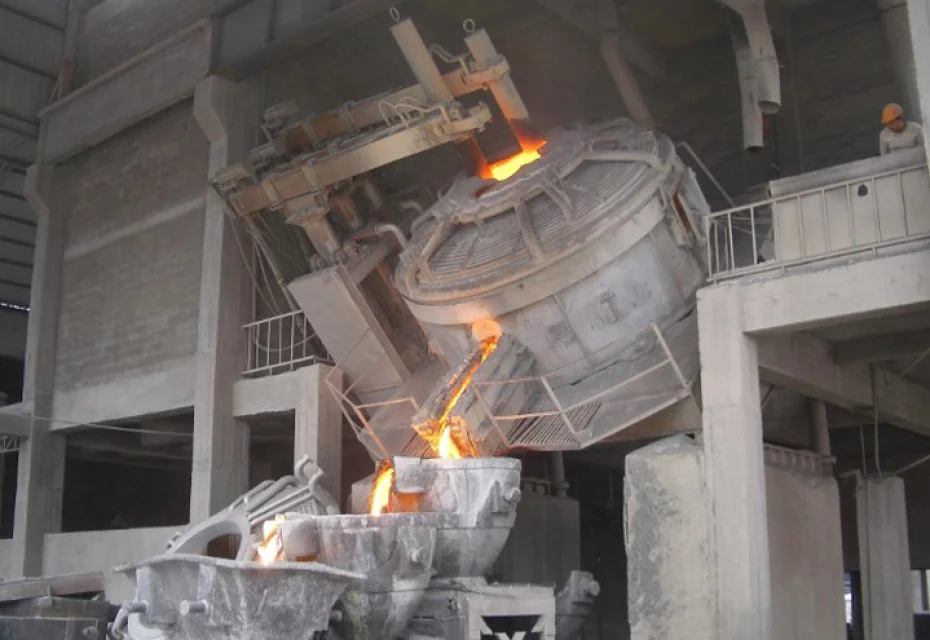
Extruded graphite: Often used in crucibles, electrodes, and structural components that require long dimensions and uniform shapes. The high strength along the extrusion direction makes it suitable for bearing applications.
This is the last one.