Strength and Hardness
Graphite possesses reliable strength and hardness, enabling long service life in diverse applications. Its mechanical performance originates from its layered crystal structure. Within each carbon atomic plane, carbon atoms are connected via robust covalent bonds. These stable intra-layer bonds maintain structural integrity when subjected to compressive loads.
Flexibility and Elasticity
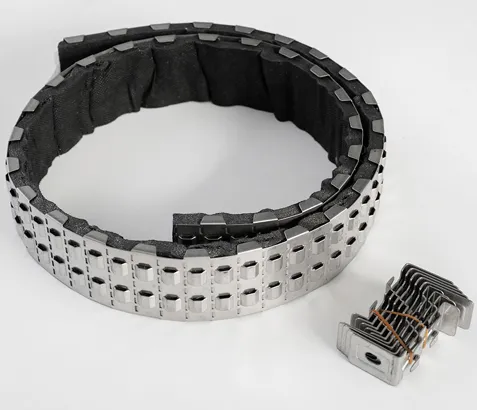
Unlike brittle diamond, graphite features remarkable flexibility attributed to its layered architecture. Graphite can bend and deform without fracturing under various operating conditions. Such flexibility alleviates mechanical strain and prevents structural damage during dynamic operation. Weak van der Waals forces between adjacent carbon layers allow the atomic sheets to bend and twist without rupture. Accordingly, graphite is widely applied in gaskets, lubricants and vibration damping components.
Anisotropic Nature
Graphite exhibits prominent anisotropy. Its material properties vary significantly depending on loading directions. It delivers high strength along the carbon layers, while the interlayer bonding is weak and permits easy sliding between sheets. This directional property is highly valuable for applications requiring targeted directional performance, including certain sensor components and electrical contact parts.
 English